

The course provides a comprehensive understanding of the economic and business environment in which organisations operate. it explores how various economic forces, market structures and business decisions shape organizational performance and outcomes
- Teacher: ANAGHA T Faculty
This course offers a comprehensive exploration of fundamental principles and advanced applications in business analytics. Beginning with the basics of probability, covering random experiments and sample spaces, the course progresses to delve into theoretical distributions, sampling methods, and estimation techniques. It places a strong emphasis on understanding various probability distributions and their practical implications in real-world scenarios. Overall, the course is designed to equip participants with a robust foundation in business analytics, fostering their ability to interpret and leverage data for informed decision-making in diverse professional environments.
- Teacher: Nihma Hanoon Faculty

The objective of the course is to provide students an understanding of entrepreneurship and the process of creating and grooving a new venture. The course also focuses on giving the students the concept of an entrepreneurs who is willing to accept all the risks and put forth the effort necessary to create a new venture.
- Teacher: ANAGHA T Faculty

This course focuses on helping the students to gain knowledge about various concepts of Operations Research and to identify and develop operational research models from the verbal description of the real system and train them to apply the operations research tools that are needed to solve optimisation problems.
- Teacher: Nihma Hanoon Faculty
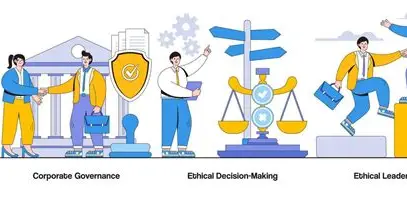
To understand the concepts and models related to corporate governance and to comprehend the relationship between ethics, morals and values in workplace.
- Teacher: Thasmina NV Faculty

This introductory course is designed to offer students a comprehensive
overview of Human Resource Management (HRM) and its critical role in
today's dynamic business environment. Emphasizing a blend of
theoretical knowledge and practical skills, the course aims to equip
students with an understanding of the fundamental principles of HRM,
including recruitment, selection, training and development, performance
management, employee relations, and compensation management.
Through a creative and interactive learning approach, students will
engage in case studies, simulations, and project-based activities, enabling
them to link HRM practices to organizational strategy and performance.
This course seeks to foster critical thinking, ethical decision-making, and
innovative problem-solving skills among students, preparing them for
effective HRM in diverse and globalized workplaces.
- Teacher: ANAGHA T Faculty

This course aims to provide an understanding of cost concept, tools and techniques from strategic perspective.
- Teacher: NASEERA Pk Faculty

This course focuses on developing a strong understanding of cost, revenue, and profit in a business, as well as recording and interpreting financial data. It provides students with the necessary knowledge and skills to communicate effectively using financial data.
CO1-Able to build strong foundation on theories, principles, and practices of Domestic Logistics Management
- Teacher: Nihma Hanoon Faculty

This course aims to introduce the students to the regulatory framework of Indian business, to enable students to understand the different laws that affect business and to expose the students to the various nuances of operating business activities and the legal compliances pertaining to them
- Teacher: Thasmina NV Faculty